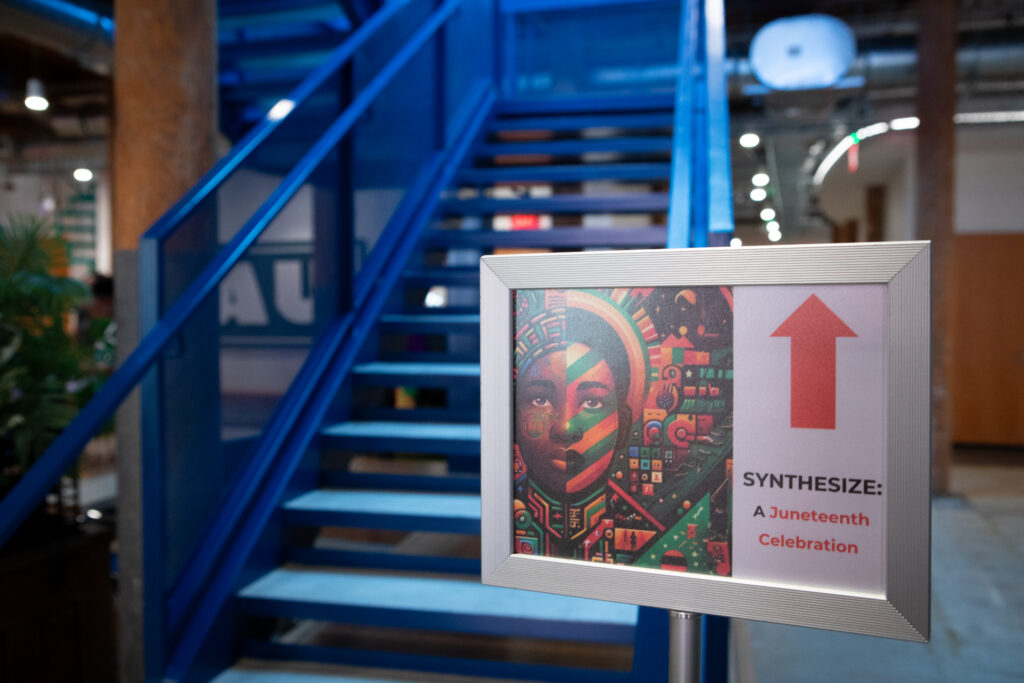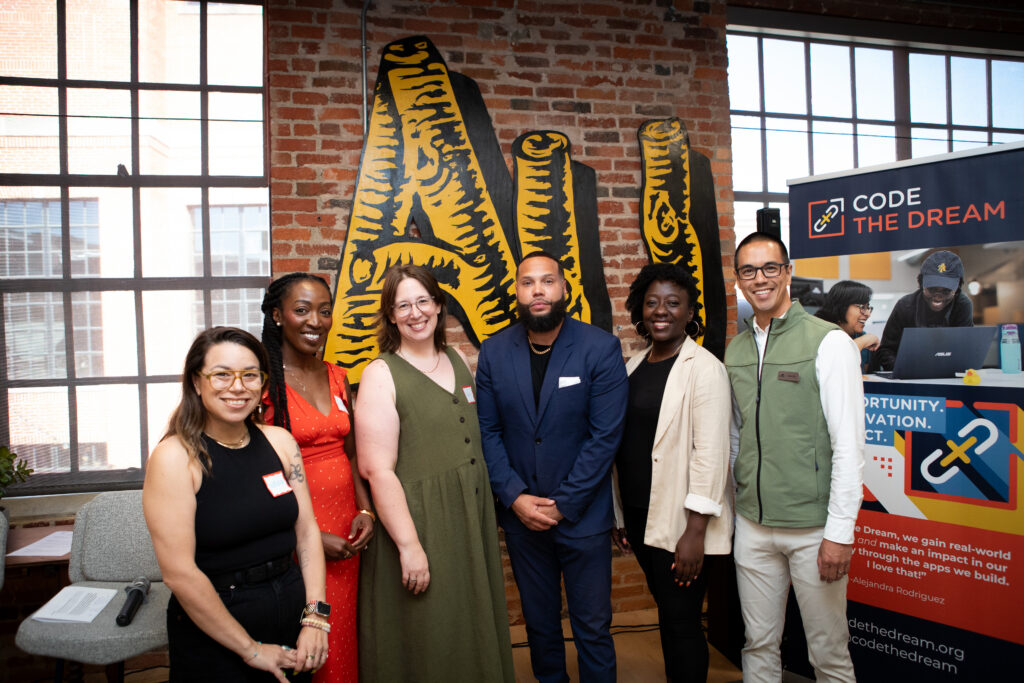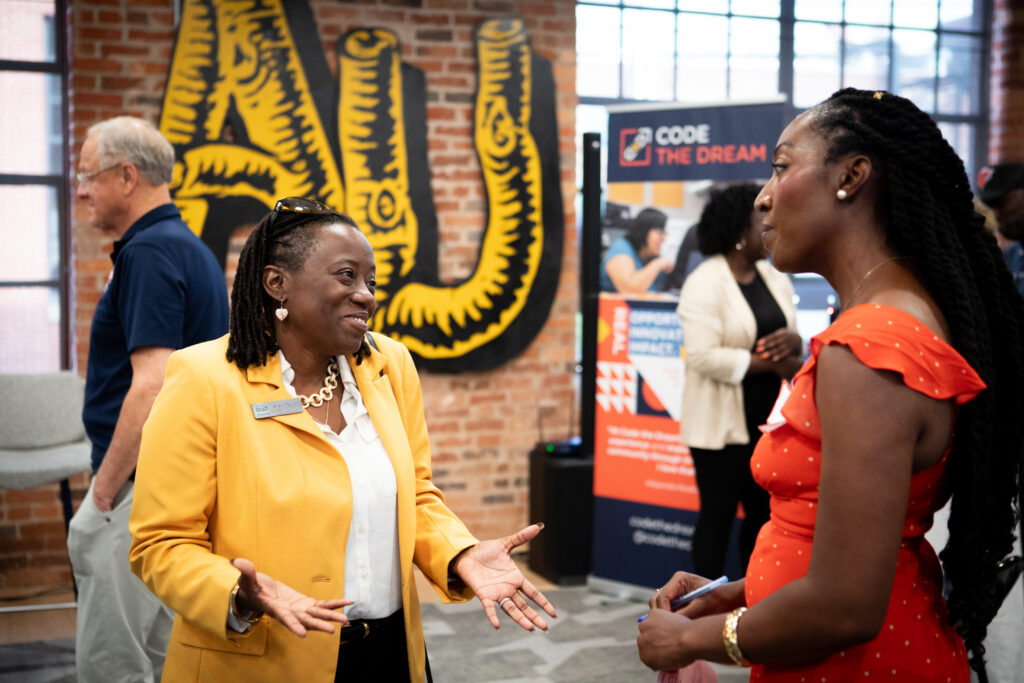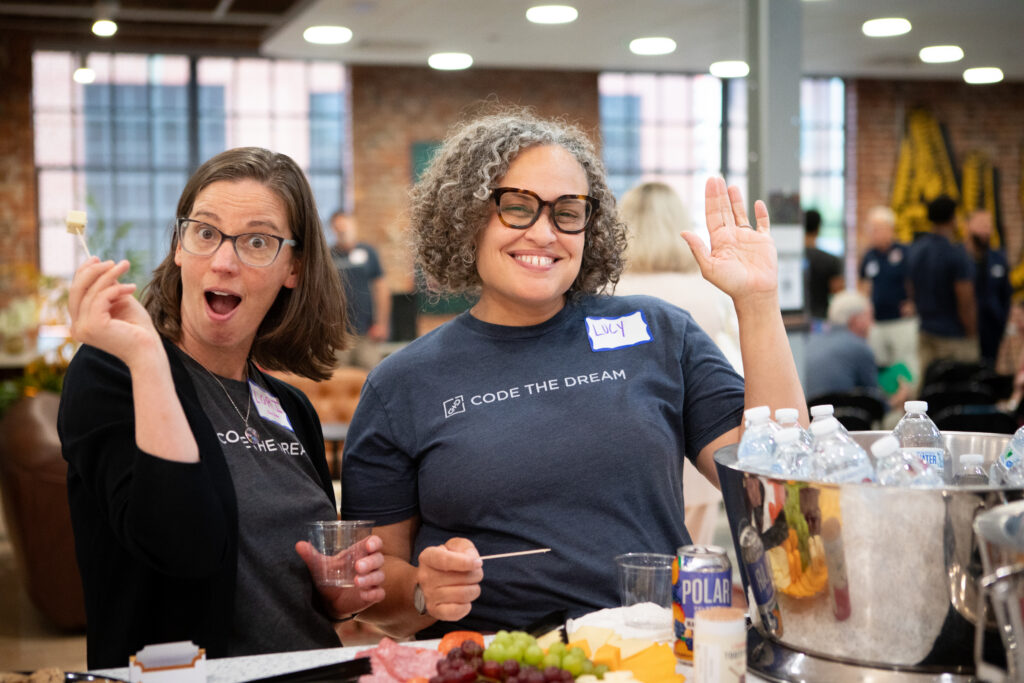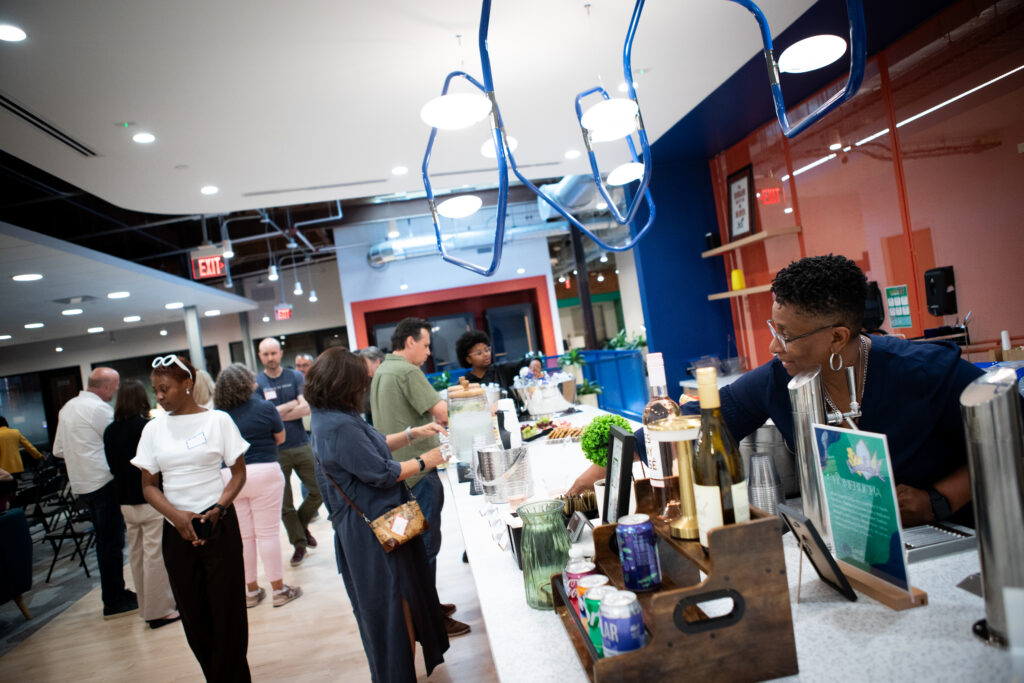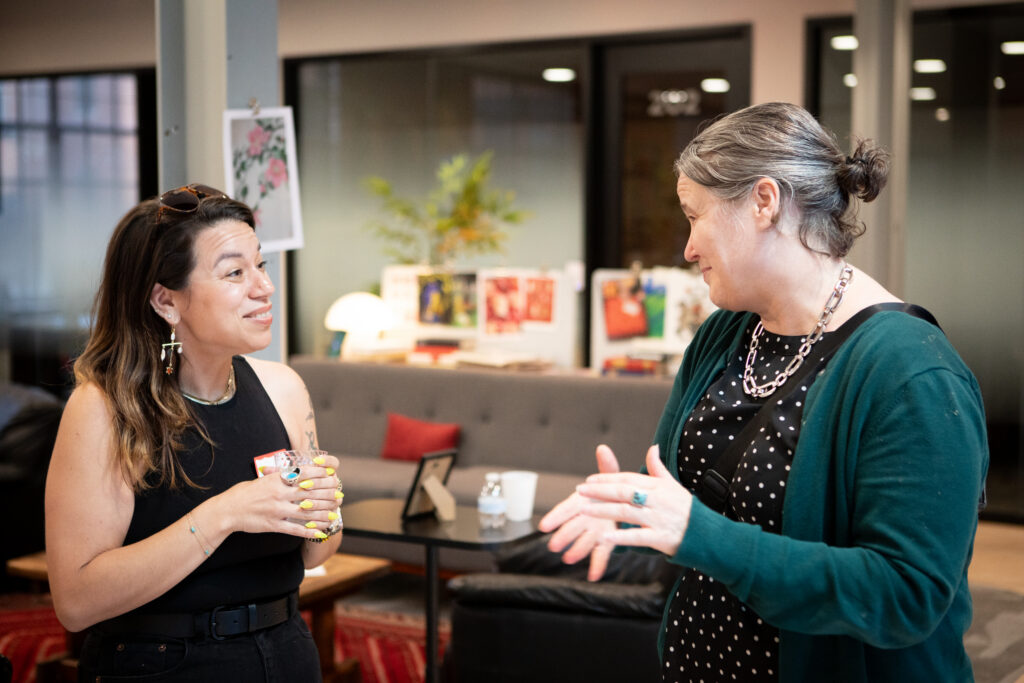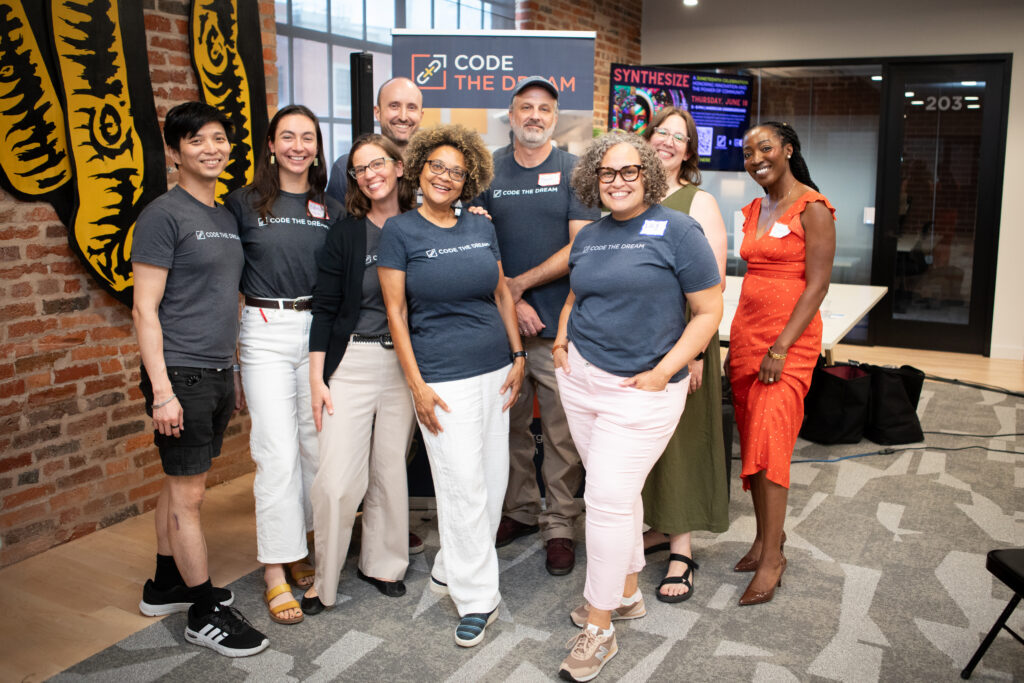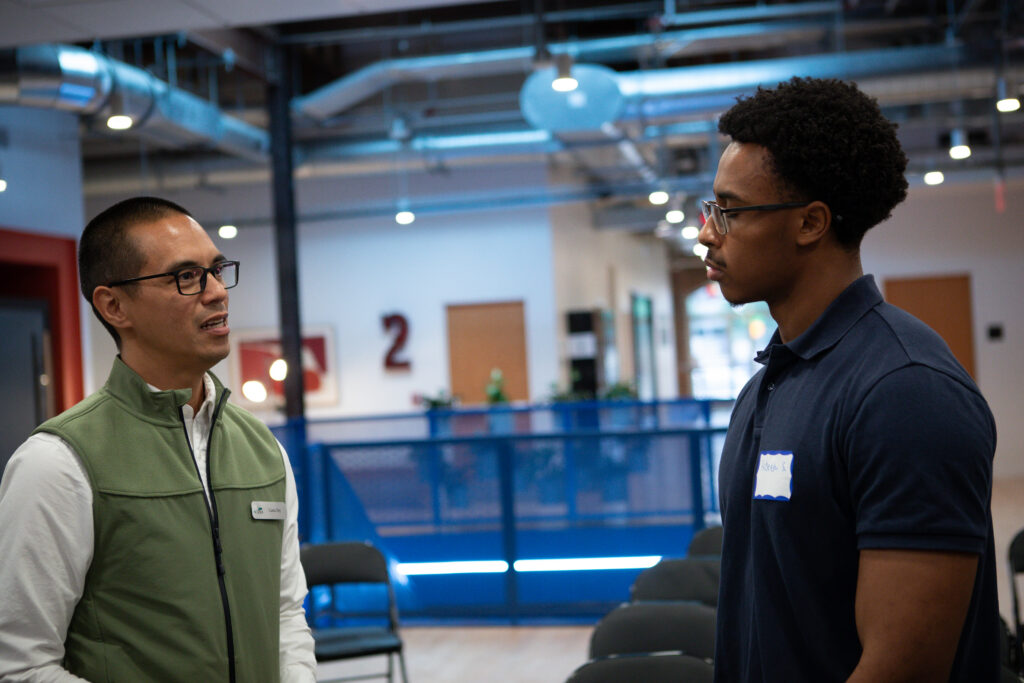

Code the Dream’s Juneteenth event, “Synthesize: A Juneteenth Celebration of Innovation and the Power of Community,” featured a panel of local leaders discussing how nonprofits, entrepreneurs, and technologists can most effectively strengthen communities and expand access to opportunity.
The panelists spoke about issues such as building equitable pathways to entrepreneurial success, driving innovation for social impact, and expanding access to economic opportunity.
The speakers were Natalia Siegel, Director of Donor Engagement for Triangle Community Foundation; Carlo Diy, Program Manager for NC IDEA; Tarryn Henry, Interim Director of the Hayti Heritage Center; Joshua Gunn, Director of the Office of Economic and Workforce Development for the City of Durham; and Daisy Magnus-Aryitey, Co-Executive Director at CTD. The event was co-hosted by Code the Dream and The American Underground, and was held at the American Underground in Durham.
“Juneteenth marks the day when the last enslaved people were told the news of their freedom,” said Magnus-Aryitey to begin the event. “And so we mark this day by getting together with our friends, with our community, and recognizing the resilience and the jubilation of this day.”
Different communities, overlapping missions
CTD Communications Director Andrea Dreier moderated the panel and began the discussion by asking each panelist about what community means to them and to their organizations.
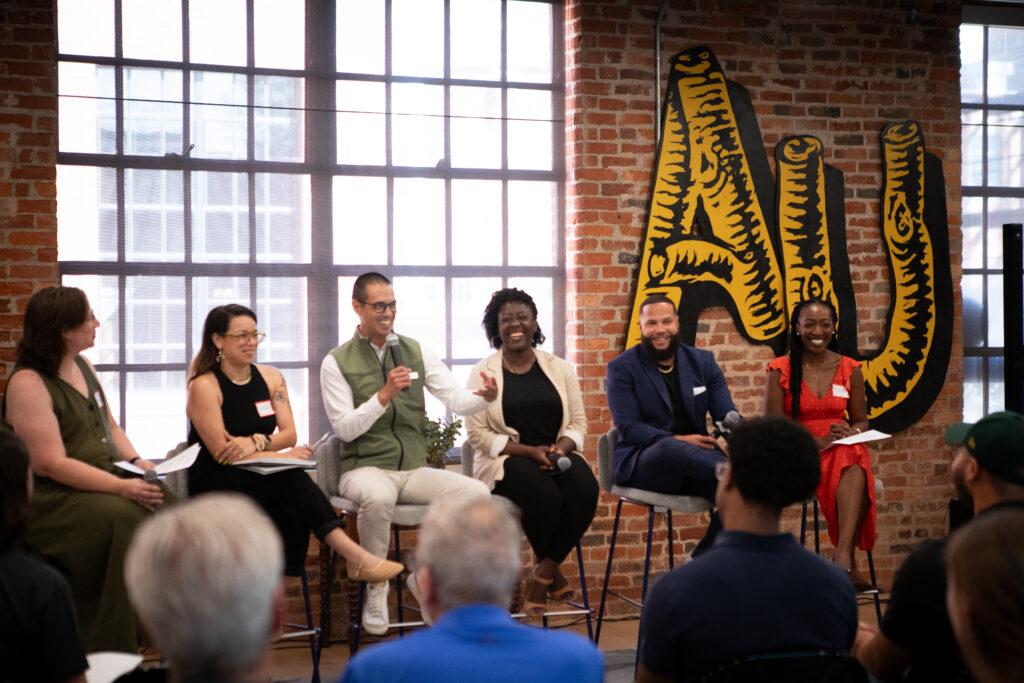
The organizations represented by the panelists serve a wide range of communities — Black artists and creatives for Hayti Heritage Center, North Carolina-based entrepreneurs for NC IDEA, for instance — but for each group, at least one aspect of their mission is removing barriers to success for underserved communities.
Gunn said that while the community served by his organization was easily defined as “any resident of the city of Durham,” his personal sense of community was more nuanced and comprised people with whom he has shared interests and people with whom he has shared outcomes. The latter definition is especially important, he said, because it recognizes that “what we do impacts others around us and we should consider that in our daily life.”
Magnus-Aryitey said that her thoughts on community are informed by the language of the country where she was born.
“I’m originally from West Africa; I was born in Accra, Ghana, and in my language there is no word for nieces or nephews, so your siblings’ children are your children. My uncle always introduces us as, ‘These are my kids.’ And I really take that expansive definition of community into the work that we do. We say that we are bringing underrepresented people into tech. It’s really a sense of responsibility. We want to be responsible for people who are marginalized; we want to bring them into the fold; we want to create opportunity for people who have not had opportunity. So our community is quite expansive, and we feel that we have a shared obligation to make sure that the tech that we build benefits all of us and that the opportunities that are out there are accessible to all of us.”
Work for the community by working with the community
Siegel said that working with local communities requires understanding that holding the purse strings doesn’t confer any special insight or intelligence. In recent years, Triangle Community Foundation has “realized that our strength is actually convening. Our strength is knowing who to bring into the room to find the answers.”
Connecting with the communities you serve requires a keen ear and a lack of ego, she said. “I think that sense of humility is really important in philanthropy. Just because we have endowments does not mean we actually have knowledge.”
That humility is key to gaining trust, something that every panelist agreed is crucial to their work. Henry said Hayti Heritage Center’s work preserving Durham’s Black cultural heritage and supporting current art, scholarship, and entrepreneurship requires the kind of trust built over time by working side by side with community members.
“The work that we are doing is for the community, but it’s also with the community,” Henry said.
Some institutions have to rebuild lost trust, an obstacle that Gunn said he faces while working for the City of Durham.
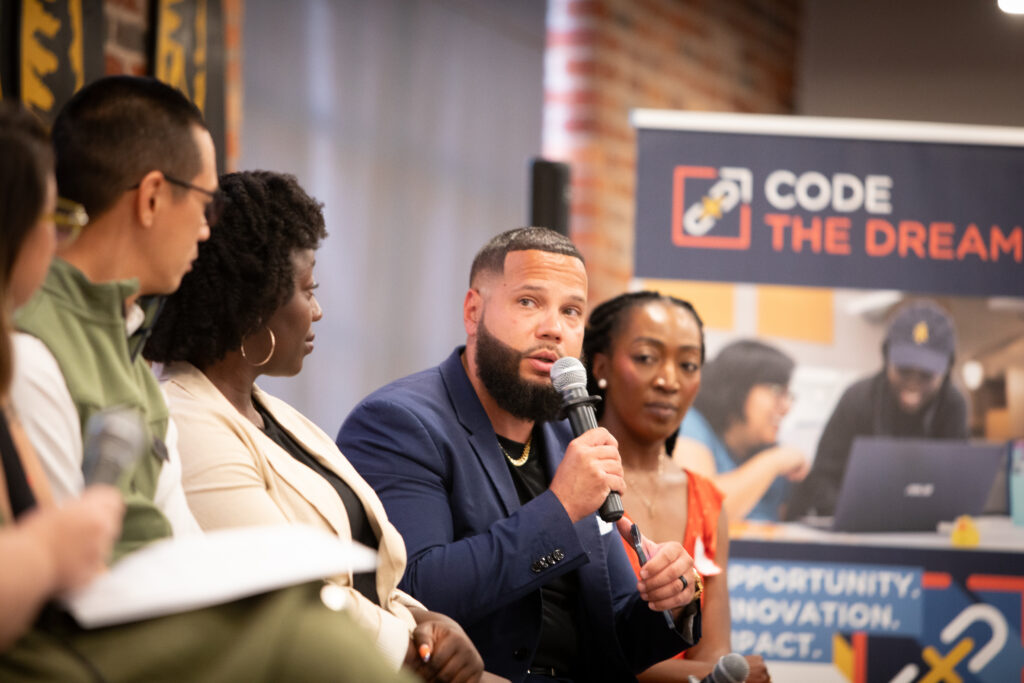
“The communities that are often marginalized, disadvantaged, or disinvested in don’t have a lot of trust in us, for good reason,” he said. “I think we can all acknowledge the history of government, the history of Durham government in particular, for Black communities. So we have to build our trust score.”
Magnus-Aryitey said that relationship building with partner organizations can be key to reaching communities unfamiliar with your organization. CTD’s growth from a small, Durham-based code school to a national organization couldn’t have happened without the help of partners who could communicate to their constituents that CTD is a dependable institution.
“When we go through partner organizations, they’re able to vouch for us,” Magnus-Aryitey said. “They’re able to say, ‘Hey, we’ve had people who have gone through this, and they’ve had really good outcomes.’ So they’re able to build trust where we cannot. And so that has been really, really key to our expansion.”
Making funding count
Uncertain access to funding is one of the primary roadblocks to opportunity in underserved communities. Diy said that for NC IDEA, the entrepreneurs receiving grants have changed since the organization was founded in 2005.
In its first several years, 90 percent of NC IDEA’s grants went to white, male entrepreneurs from the Triangle. Now, he said, 70 percent of those grants go to entrepreneurs from underserved communities.
“Underserved for us are female founders, minority founders, rural founders, and founders in … economically distressed counties. So the majority of our grant money now happens in these communities. That’s, to us, the way that you’re now getting representation and now, who is at the table to inform any of the next actions, any of the next decisions you make is going to be so much more representative of North Carolina as a whole. So that shift over the past 21 years is something that I know the foundation is really proud of.”
Gunn said the city’s role in economic development is wide-ranging and can fill some of the gaps left by philanthropic groups. In historically underserved communities, there can be a need for business-related education or small grants to do things like fix streetlights and signage.
“The city works directly with business owners on things that might not be as sexy or headline-grabbing,” Gunn said. “Like how to work QuickBooks, how to manage your finances, how to market your business.”
Another way to make sure that philanthropic efforts are effective is to let members of the affected communities decide how to apportion the funds, Siegel said. Triangle Community Foundation is currently working to raise $10 million to invest in affordable housing efforts in Durham. Once the funds are raised, the committees deciding how to invest them will be run by community members, Siegel said.
In describing CTD’s approach to building new technology that addresses problems faced by a given community, Magnus-Aryitey outlined a simple approach that summed up much of the evening’s conversation.
“When we approach the work with the spirit of humility and the spirit of curiosity, that’s when we can build solutions that work for individuals and for communities. We have an exceptional amount of technical expertise on our team, but before we build anything, we always start with conversations. We go and we try to understand what barriers exist, what are they facing. And then from that deep understanding, we begin to build products.”
Juneteenth: Resilience and Jubilance
Resilience and jubilance, central to the spirit of the holiday, were also central to the conversation.
Henry discussed the Hayti district’s ties to Black Wall Street, a once-thriving commercial and financial center that represented not just the entrepreneurial acumen of its founders, but also their resilience.
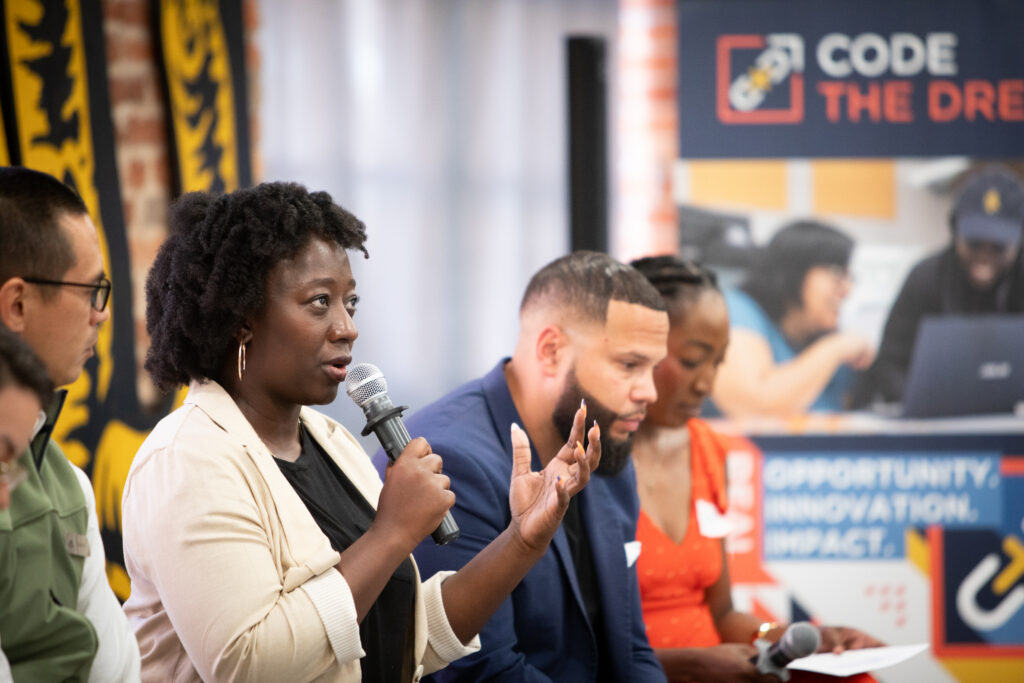
“One of the things that’s not as publicized when we talk about Black Wall Street and what happened back then is that the people who built Black Wall Street were one generation removed from slavery. And they were able to build something this massive and extensive and impactful in such a short amount of time.”
Many of the panelists mentioned that working on thorny issues during difficult times necessitates tapping into joy and optimism wherever you find them. For Diy, both were present in an exchange with his young daughter.
After an especially excellent summer day, Diy asked his daughter if it was the best day she’d ever had. She replied that it was exactly the fourth best day of her life. Third, she said, was her birthday, and second was the state fair. When Diy asked what was first, she told him she didn’t know because it hadn’t happened yet.
“It was just something about a young person 100 percent sure that the best day of her life had not yet happened and was still in the future… I bawled later that night. I was like, okay, I’m going to try to hold that maybe the best day of all of our lives has not yet happened.”